

Honeymoon Tracker
The trends of incumbents in their first year in office, juxtaposed with their current term, reveal intriguing stories about their governance.

Introduction
Executives around the world have been known to experience a phase at the start of their term: the Honeymoon phase. This has them enjoying higher-than-average approval ratings at the start of their term. However, for incumbents, their stories can differ, as the start of their second term generally begins less favorably in comparison to their first.
To better understand this phenomenon, this piece highlights the executive approval of the incumbents of Australia, Canada, Spain, Poland, Romania, and the United States.
Australia
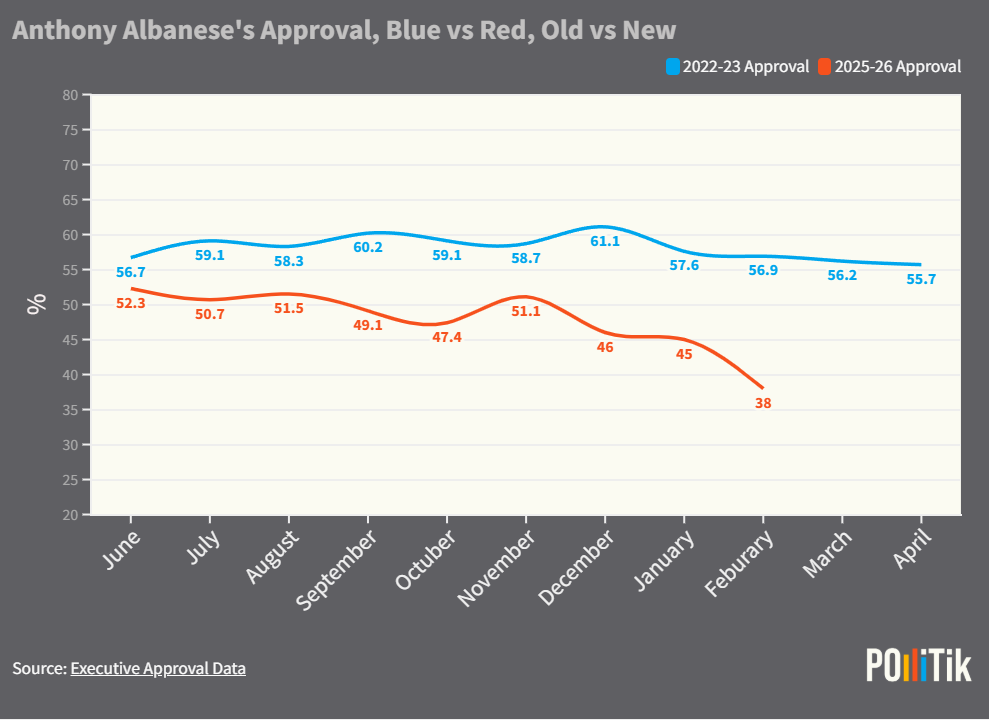
Albanese’s trajectory becomes a simple shift from early momentum to steady decline. His first year in 2022 brought quick wins such as the minimum‑wage rise, the Climate Change Act, and the National Anti‑Corruption Commission, which lifted his approval to 60 percent before inflation, and the Voice debate weakened that optimism in early 2023.
In contrast, Albanese’s second‑term first‑year opened at 52 percent in June 2025 and slid to 38 percent by February 2026 as cost‑of‑living strained, the Bondi attack’s aftermath, rising social‑cohesion fears, a rate hike, a budget blowout, and One Nation’s growing prominence reshaped the political climate around him.
Canada
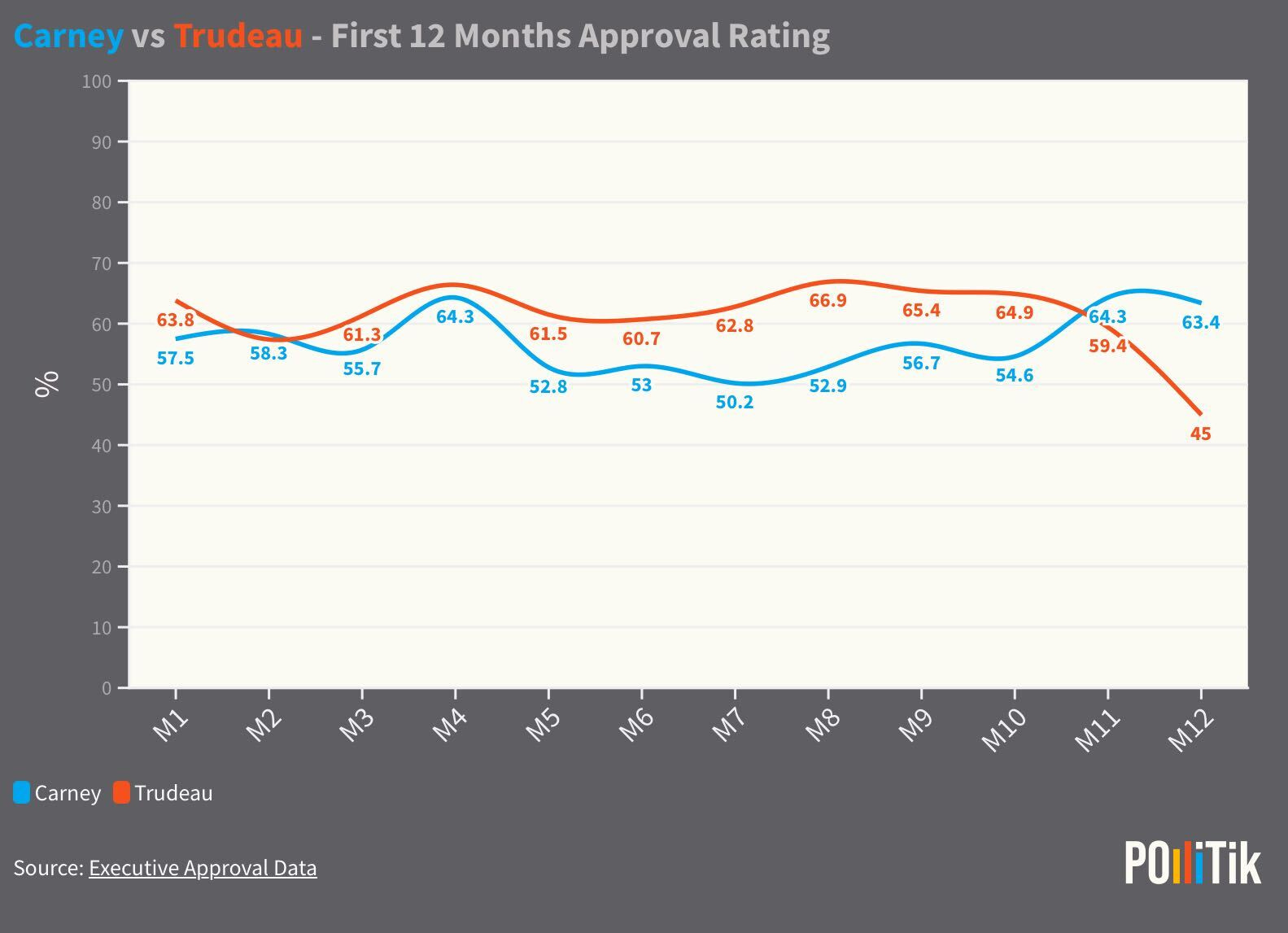
Justin Trudeau and Mark Carney show two different paths from early strength to shifting public moods. Trudeau began his first year in the low‑to‑mid 60 percent range, lifted by a post‑election honeymoon and optimism around his agenda, but his approval eased downward as worries about spending, deficits, and slower economic results grew.
Carney started in the high 50s and slipped into the low 50s mid‑year as cost‑of‑living pressures and trade uncertainty dominated debate, then recovered into the low 60s by year’s end as his economic message gained traction and his international role became more visible. Trudeau’s movement reflected fading early enthusiasm, while Carney’s shifts tracked changing views of economic management.
Spain
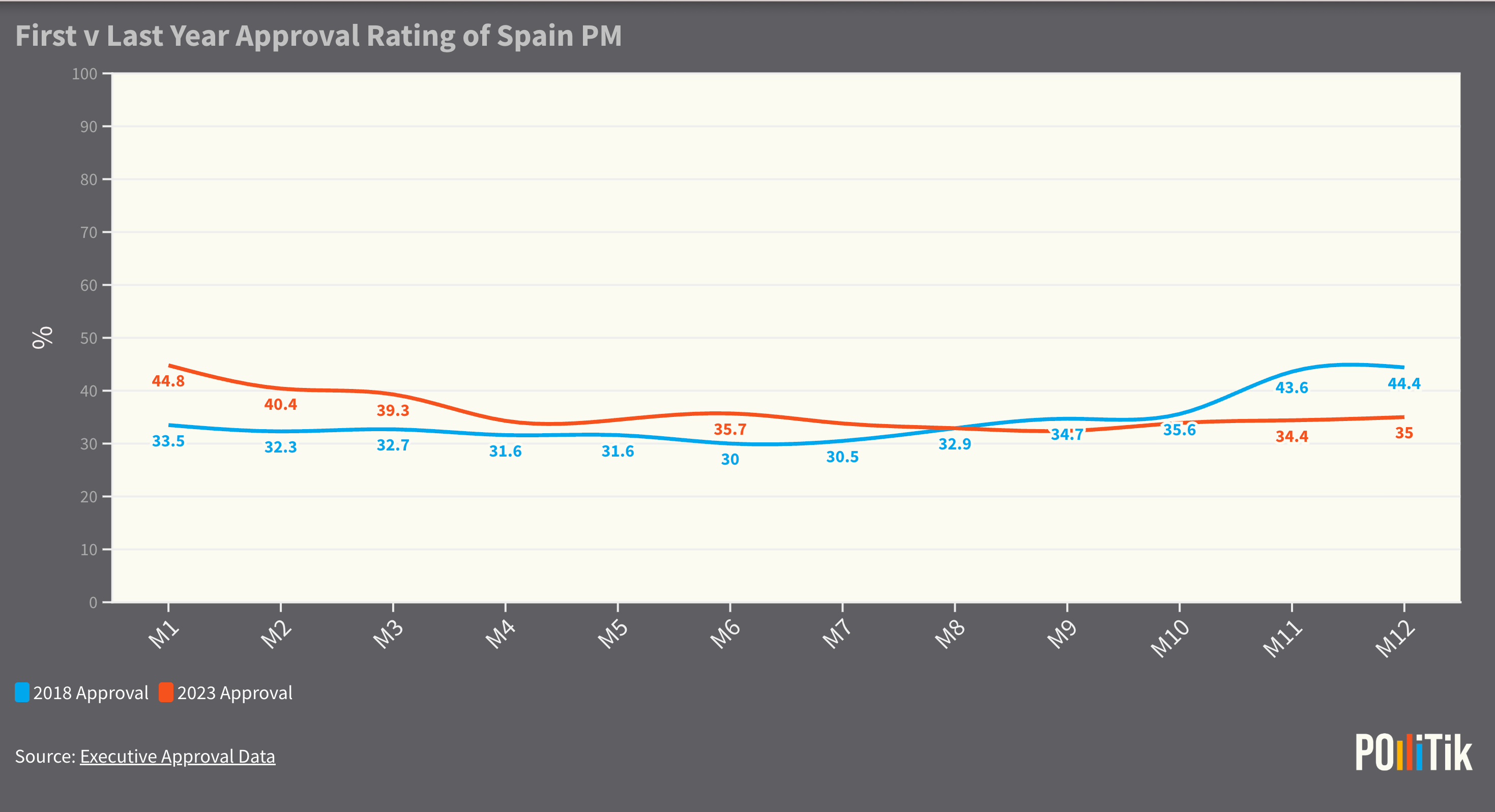
Pedro Sánchez’s early fortunes move from a constrained start to a brief lift and then a renewed decline. He entered office in 2018 through a no‑confidence vote, which kept his approval near 33% while he governed with only 84 seats and faced high unemployment and tense party dynamics. The April 2019 election briefly strengthened his position and pushed his approval into the low‑40s.
Conversely, his 2023 reelection produced a short honeymoon in the mid‑40s before support slipped again. A January 2024 rise to 35.7% followed a large minimum‑wage increase, but economic strain, corruption cases, polarization, and backlash to the “Only Yes Is Yes” law pulled his ratings downward once more.
Romania
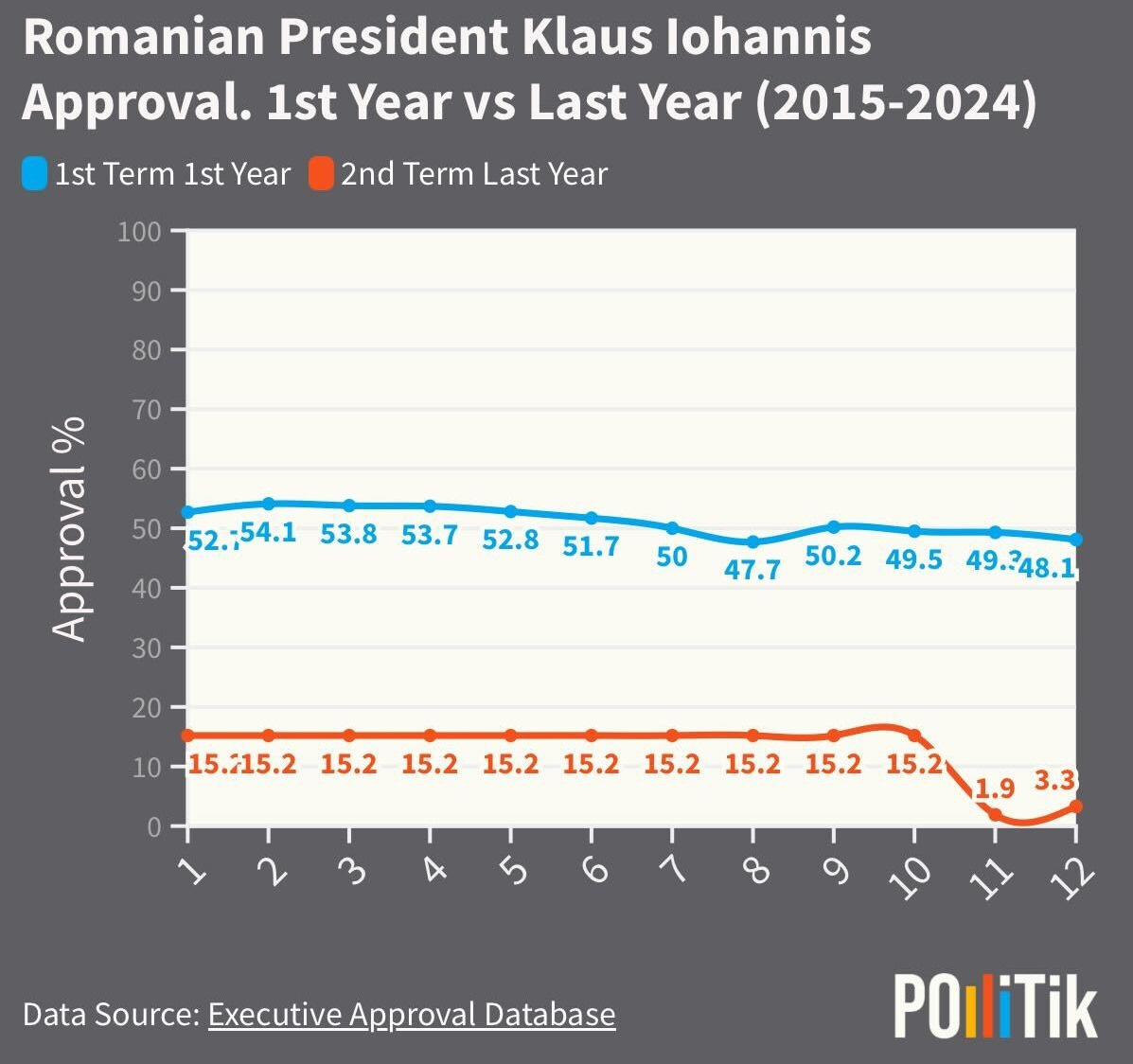
Klaus Iohannis’s presidency reduces to an early surge of credibility followed by a steep collapse. Elected in 2014 with a mandate to advance European integration and curb corruption, he enjoyed approval above 50 percent and entered his 2019 second term with expectations of deeper reform.
Instead, his final years revealed a detached leader unable to address mounting domestic pressures, creating space for a rising far‑right that eventually threatened impeachment. By early 2025, his approval had fallen below five percent, and he resigned under intense pressure, leaving office as a symbol of stalled reform rather than the transformative figure many anticipated
United States
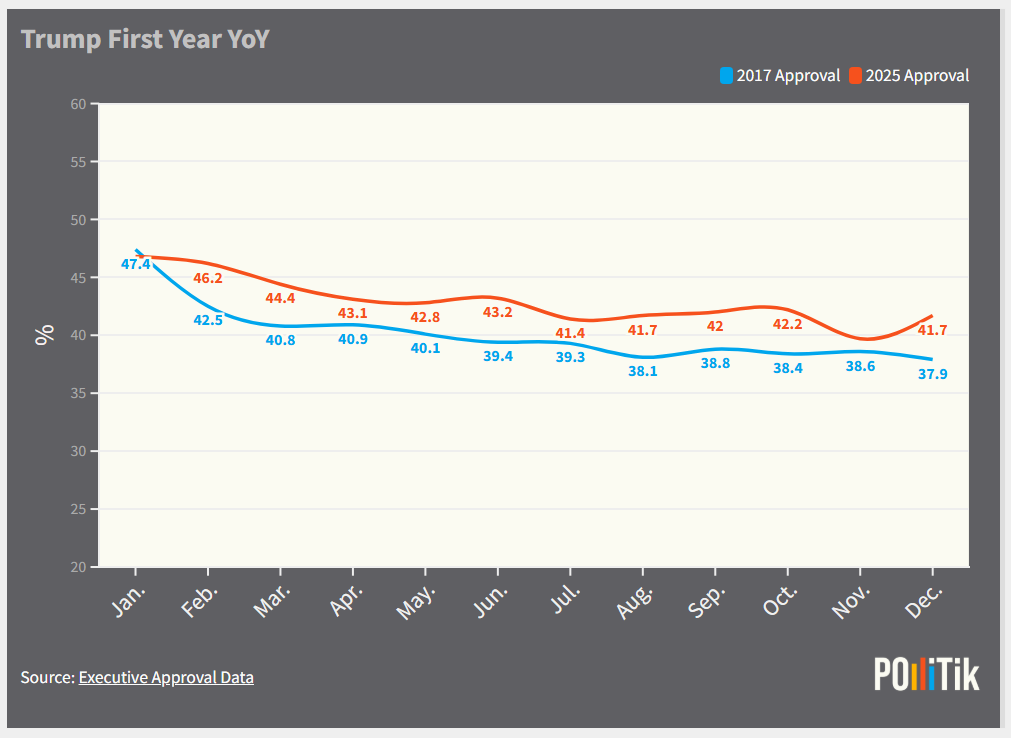
Donald Trump’s approval across his two terms can be reduced to a simple contrast between early lift and familiar decline. He began his first term in 2017 with approval in the mid‑40s and faced immediate polarization, as early executive actions such as the travel‑ban order triggered protests and prevented any real honeymoon.
His non‑consecutive second term opened with slightly higher month‑to‑month approval, suggesting that time out of office had softened some public attitudes, but the gains faded as he reversed key promises and economic pressures mounted. Rising inflation and unemployment eroded support among voters who had returned to him out of frustration with Democratic leadership, producing another downward slide.
Poland
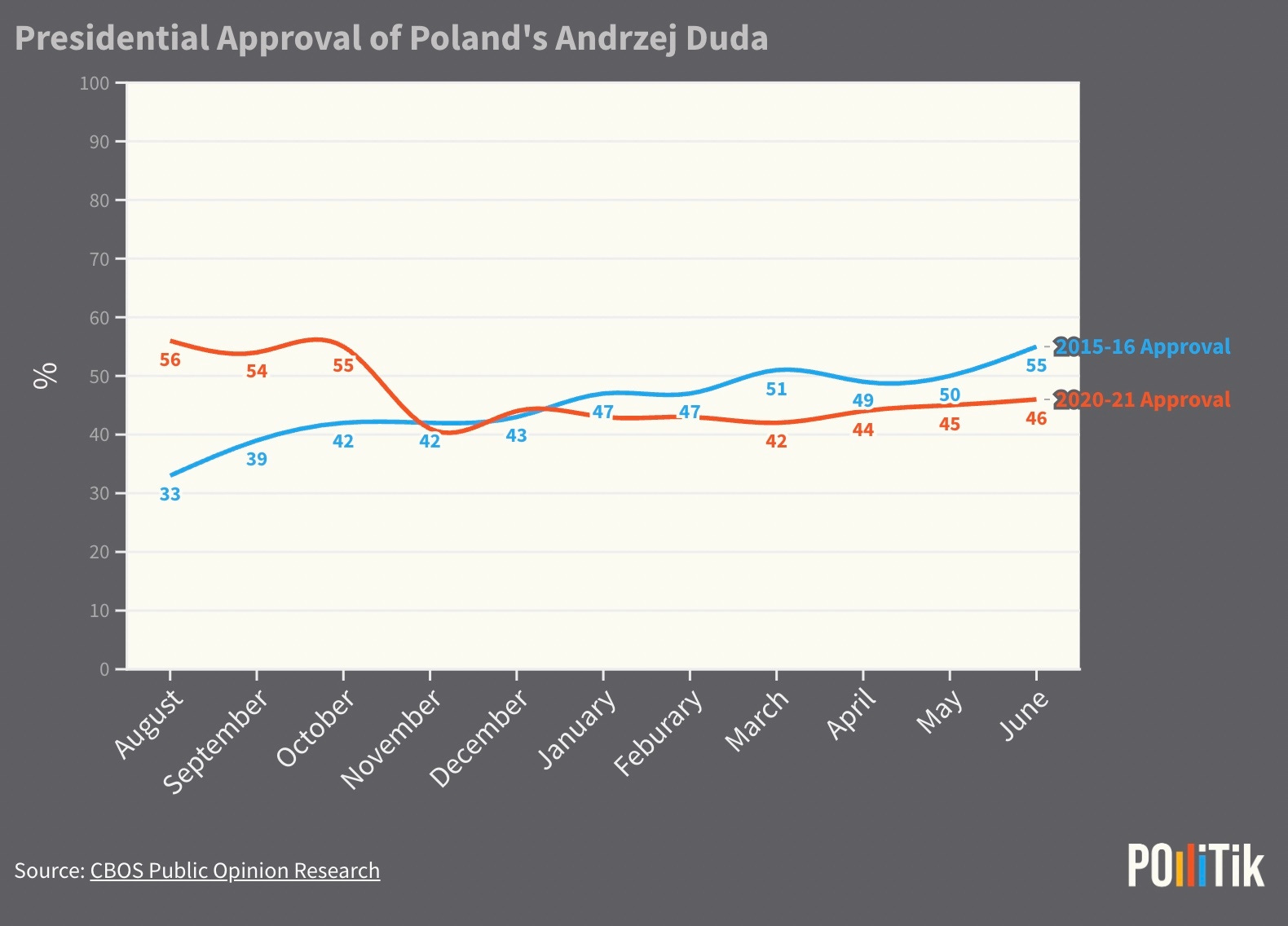
Andrzej Duda’s approval followed two sharply different arcs, shaped by the political climate surrounding each term. His 2015 first year saw support rise from the low‑30s to the mid‑50s as the new Law and Justice government launched popular programs like the “500+” benefit, giving him a traditional honeymoon.
In his second term, beginning in 2020, it moved in the opposite direction: early high approval slipped into the mid‑40s amid the pandemic, clashes with the European Union over judicial reforms, and mass protests after the abortion ruling. The turbulence underscored how presidential approval often reflects the stability of the era more than the leader himself
Conclusion
Across six countries, the incumbent's honeymoon has proven fragile as economic pressures consistently override past achievements in shaping public approval. The lesson: incumbent popularity is dependent on their ability to pursue policies that resonate greatly with the majority of their citizens and increase popular sentiment retention.